The posterior cruciate ligament (PCL) is a crucial structure for maintaining the posterior stability of the knee joint. It consists of the anterolateral bundle (ALB) and the posteromedial bundle (PMB). Compared with conventional single‑bundle reconstruction, double‑bundle reconstruction more accurately restores the native anatomy and biomechanical function of the PCL. However, this technique faces challenges such as unclear identification of the attachment points, high demands on tunnel accuracy, the prevention of tunnel convergence, and the avoidance of posterior high‑risk structures, highlighting the urgent need for more precise and efficient intervention strategies.
Against this background, the team led by Professor Yu Jia-Kuo, director of the Orthopedics and Sports Medicine Center at Beijing Tsinghua Changgung Hospital, Tsinghua University, recently developed a self‑designed all‑around sports medicine reconstruction surgical robot system. In this study, the team achieved the world's first deep application of a robot‑assisted surgical system based on CT and MRI multimodal image fusion in the field of orthopedics, successfully performing robot‑assisted double‑bundle posterior cruciate ligament reconstruction. This approach provides a new solution for achieving more precise double‑bundle PCL reconstruction and represents a pioneering achievement in real‑time human‑machine collaborative control between the surgeon and the intelligent system.
Following the world's first robot-assisted double-bundle anterior cruciate ligament reconstruction performed on December 4, 2024, Professor Yu Jia-Kuo's team successfully completed the world's first robot-assisted double-bundle posterior cruciate ligament reconstruction at Beijing Tsinghua Changgung Hospital on January 26 of this year. During the procedure, the robotic system not only provided highly sensitive real-time force feedback but also integrated a precise visual navigation module, enabling overall operational accuracy to be strictly controlled at the sub-millimeter level, specifically less than 0.5 mm.
Leveraging this high-precision platform, the team successfully utilized the robot to drill two independent bone tunnels for the ALB and PMB on the femur, as well as two independent bone tunnels for the ALB and PMB on the tibia under precise navigation. Throughout the robot-assisted drilling of these tunnels, the integration of precise navigation and force feedback safety mechanisms effectively avoided critical neurovascular structures adjacent to the PCL—including the popliteal artery, popliteal vein, and tibial nerve—thereby enhancing surgical safety and anatomical fidelity (Figure 1). The approach also significantly reduced operative time, establishing a foundation for the patient's return to sports.
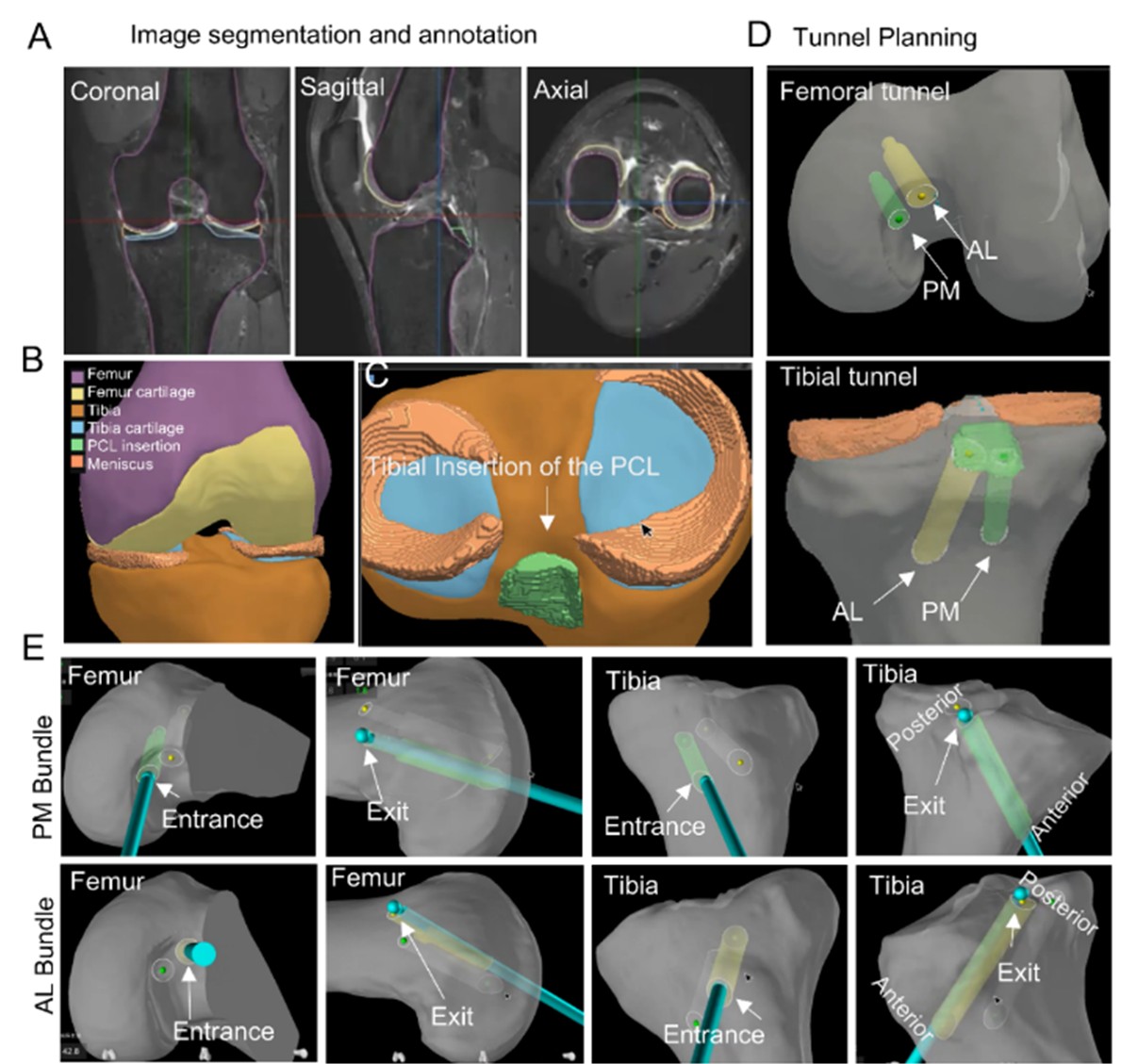
Figure 1. Robot-assisted double-bundle posterior cruciate ligament reconstruction.
Intraoperative arthroscopic examination and postoperative imaging evaluation results both confirmed that the surgical outcome was highly consistent with the preoperative plan: all bone tunnels were precisely located in the predetermined anatomical attachment areas, the morphological structure and tension of the reconstructed ligament met ideal standards, and the posterior stability of the knee joint was reliably restored (Figure 2).
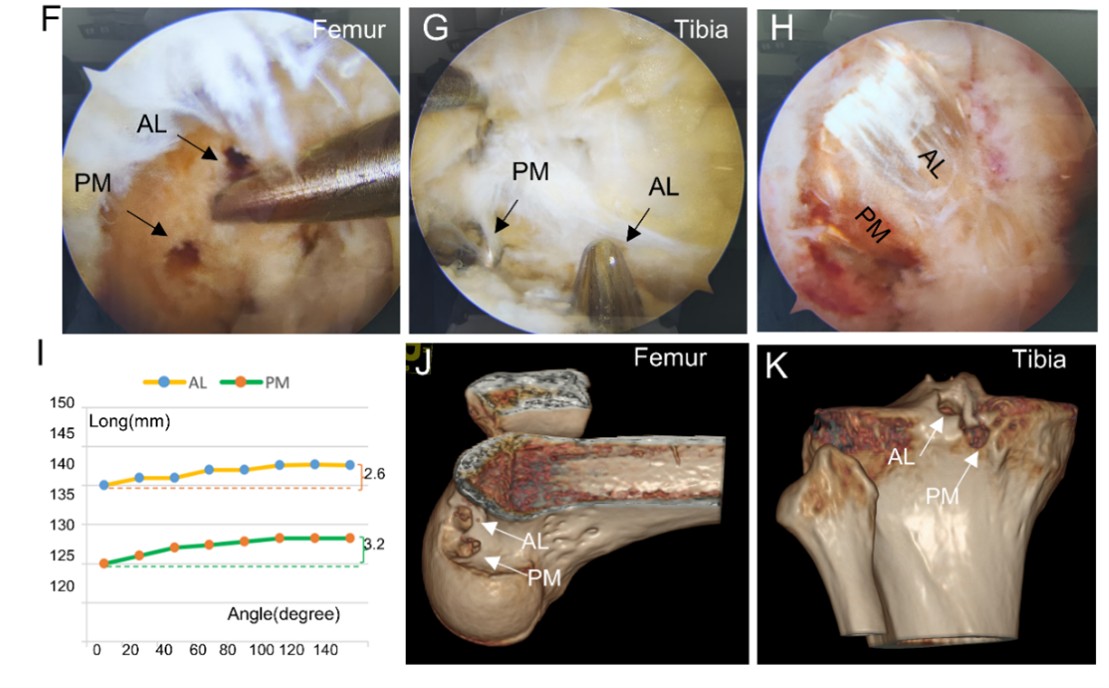
Figure 2. Intraoperative and postoperative validation of robot-assisted double-bundle posterior cruciate ligament reconstruction.
This technology represents a paradigm shift in ligament reconstruction surgery in orthopedics and sports medicine—by achieving sub‑millimeter dynamic real‑time positioning and intelligent guidance, it precisely transforms the reconstruction process of the anatomical attachment sites of the PCL from a traditional model reliant on "experience‑based estimation"into a new era of "digital navigation" and intelligent collaboration. This breakthrough significantly enhances the precision and clinical reproducibility of surgical procedures, lays a solid technological foundation for the future of orthopedics, advancing precision, personalization, and intelligence, and opens a new chapter in intelligent precision orthopedics.
The related research findings were published in the International Journal of Surgery under the title "A novel approach to double-bundle posterior cruciate ligament reconstruction: leveraging individualized robotic navigation and multimodal imaging for superior precision and feasibility." Professor Yu Jia-Kuo is the corresponding author, and Dr. Sun Yifeng, an attending physician at the Orthopedics and Sports Medicine Center of Beijing Tsinghua Changgung Hospital, is the first author. This work was supported by a Beijing science and technology project.
Paper link: https://journals.lww.com/international-journal-of-surgery/fulltext/9900/a_novel_approach_to_double_bundle_posterior.4547.aspx




 Research Updates