Professor Tony Hu, dean of the School of Biomedical Engineering at Tsinghua University and Zhao-Yi Endowed Professor, has been named the 2026 recipient of the Founder's Award from the American Association of Extracellular Vesicles (AAEV). The association's highest honor is presented to one researcher each year for outstanding work in extracellular vesicles (EVs) and contributions to AAEV.
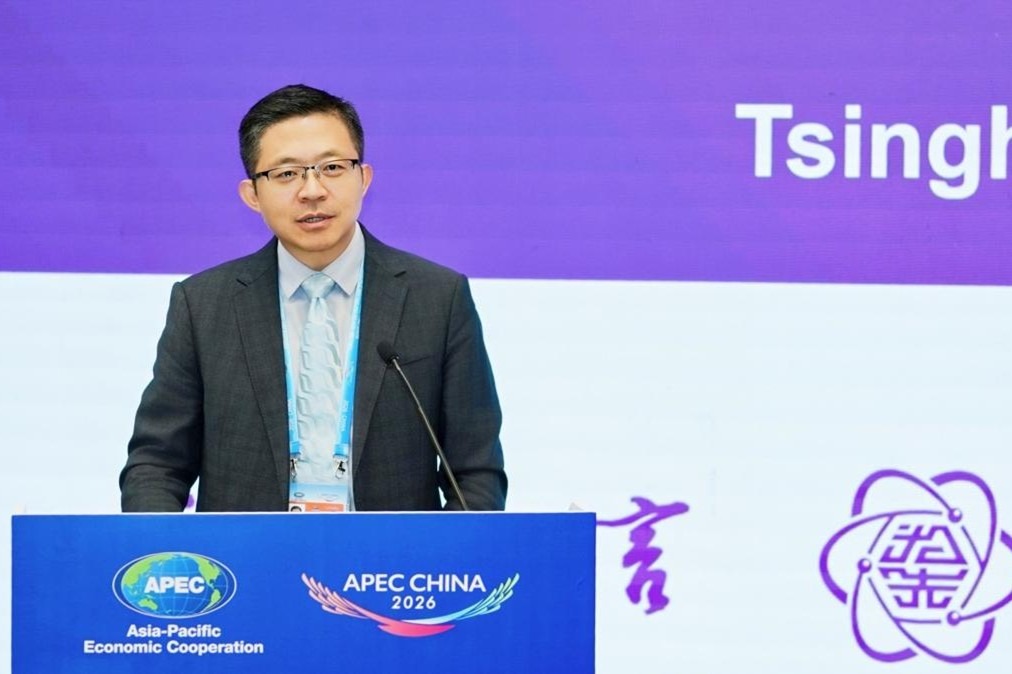
Professor Hu's research spans biomedical engineering, nanomedicine and molecular diagnostics, with a focus on EV-associated biomarkers and diagnostic methods for major diseases.
His team has combined nanotechnology and biosensing to develop sensitive EV assays for detecting disease-associated molecular markers in complex biological samples. More recently, it developed a liposome–EV fusion approach that delivers nucleic-acid amplification and CRISPR detection reagents into vesicles, enabling sensitive analysis of EV-encapsulated nucleic acids without a separate bulk EV-isolation step. The group is also exploring nanoplasmonic sensing and multiplex enrichment for tumor-derived EVs, with potential applications in earlier disease detection and more precise molecular diagnosis.
Professor Hu has published more than 200 scientific papers and filed 30 patent applications in nanomedicine and related technologies; 14 have been licensed to companies.
Professor Hu was elected a Fellow of the American Institute for Medical and Biological Engineering and the National Academy of Inventors in 2023, a Fellow of the International Academy of Medical and Biological Engineering in 2024, and a Fellow of the European Academy of Sciences in 2025. He also received the Academy of Diagnostics & Laboratory Medicine's 2025 Award for Outstanding Contributions to Clinical Chemistry in a Selected Area of Research. The AAEV honor recognizes his EV research and reflects the international reach of biomedical engineering at Tsinghua University.
Founded in 2021, AAEV advances EV research, technology development and clinical translation through its annual conference, publications and international collaborations.
Candidates for the Founder's Award must be full professors with at least 10 years of independent research experience and active AAEV members. Selection considers original research, scholarly influence and service to the association. The recipient receives a commemorative plaque and delivers a keynote address at AAEV's annual conference.
Raghu Kalluri, MD, PhD, founding president of AAEV and senior vice president and executive director of the UTMB Cancer Center, congratulated Professor Hu: “This recognition is a fitting tribute to Dr. Hu's pioneering contributions to extracellular vesicle research and his relentless pursuit of translational diagnostics that bridge engineering and medicine. His visionary leadership and scientific rigor continue to inspire the field and exemplify the very spirit of innovation that this award was created to honor.”
Ke Cheng, chair of AAEV's board of directors and the Alan L. Kaganov Professor of Biomedical Engineering at Columbia University, said: “I extend my warmest congratulations to Dr. Tony Hu on receiving the AAEV Founder’s Award. This honor carries exceptional weight, as it recognizes those who have fundamentally shaped the field of extracellular vesicles and set the standard for scientific excellence. Dr. Hu's receipt of this award is a testament to his pioneering contributions and the profound impact of his work on both the research community and translational medicine.”
Professor Lei Zheng, Vice President of Nanfang Hospital, Southern Medical University, and Standing Vice Chair of the Extracellular Vesicle Research and Application Committee (CSEV) of the Chinese Research Hospital Association, remarked: “First, I would like to extend my warmest congratulations to Dr. Tony Hu on receiving the Founder's Award, the highest honor conferred by the American Association of Extracellular Vesicles. As a researcher working full-time in China, Professor Hu has received the highest honor from this U.S. association in the field. This represents significant recognition of our country’s researchers in the exosome field and is a source of immense pride for all of us. At the same time, I hope that, in the future, more Chinese scientists will contribute to the global exosome field.”



 News
