On April 23, Professor Ibrahim Abubakar, Fellow of the Academy of Medical Sciences (FMedSci), the U.S. National Academy of Medicine, the German National Academy of Sciences (Leopoldina), and the European Academy of Sciences, and Vice-Provost at University College London (UCL), delivered the 270th lecture in Tsinghua University‘s Global Vision Lecture Series. The talk, titled “Threats to Our Future Health: Actions the World Must Take Today,” was hosted by Professor Wong Tien Yin, Vice-Provost of Tsinghua University and Senior Vice-Chancellor of Tsinghua Medicine, who presented Professor Abubakar with a commemorative plaque.
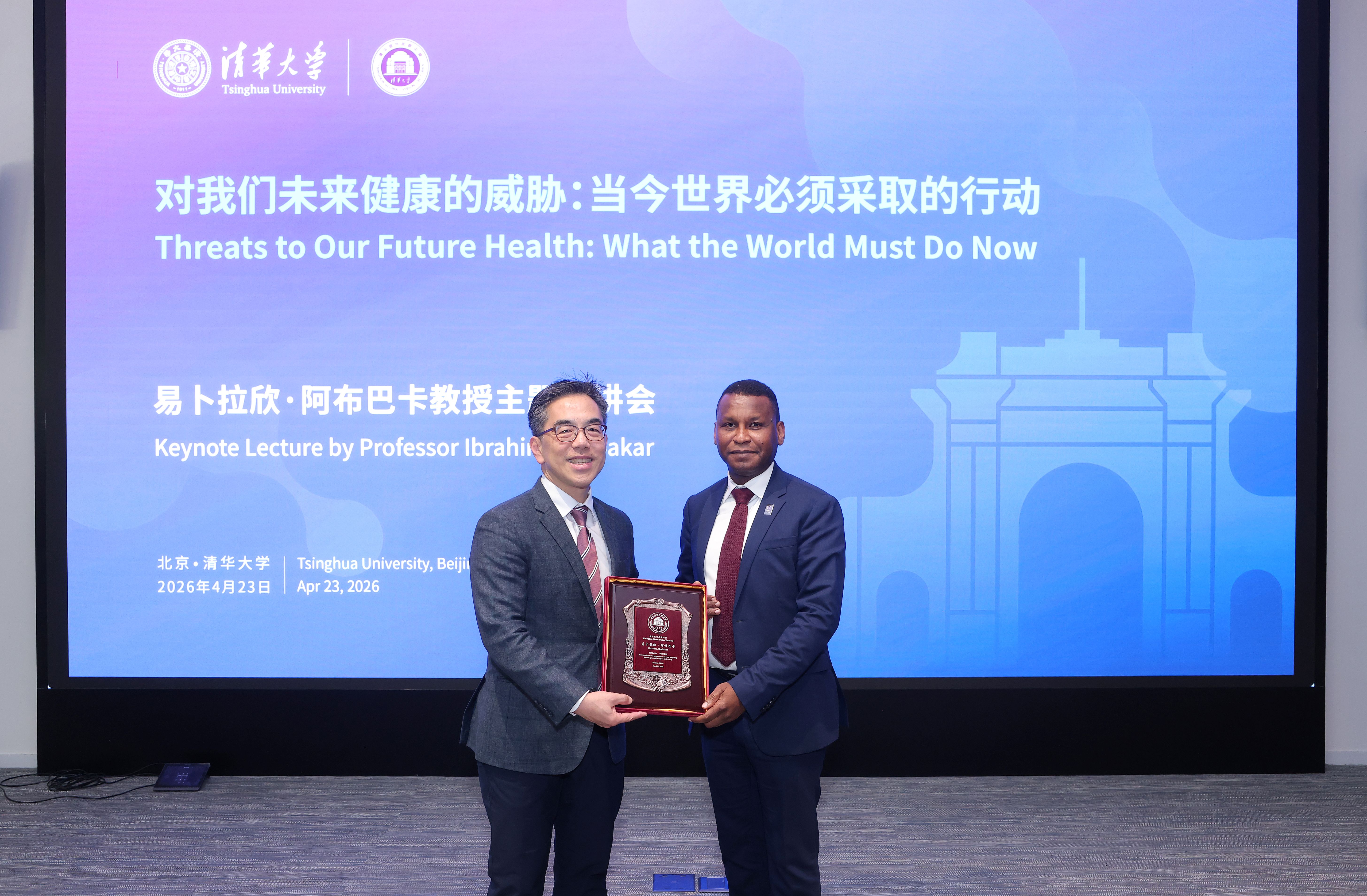
Wong Tien Yin presenting the commemorative plaque to Ibrahim Abubakar
In his opening remarks, Wong Tien Yin noted that global health is facing a confluence of multiple crises — infectious diseases, climate change, and the rapid development of artificial intelligence — all profoundly affecting human health security. Professor Abubakar, who has long been engaged in research on infectious disease epidemiology, global health governance, and pandemic preparedness, has made significant contributions to policy discussions on global health collaboration and pandemic risk management.
Drawing on The Lancet Commission on 21st Century Global Threats to Health — which was formally established in December 2022 — Professor Abubakar analyzed the multiple risks confronting human health. He pointed out that the COVID‑19 pandemic, climate change, and AI development have all laid bare the fragility of global health systems. Based on Global Burden of Disease data, the Commission screened more than 500 risks and identified 17 major health threats covering chronic diseases, environmental factors, antimicrobial resistance, security issues, and technological risks. He emphasized the disproportionate impact on marginalized communities, while the main shortcomings in global prevention and control lie in short‑sightedness and complacency. He proposed three key strategies: establishing a global health threat monitoring mechanism, increasing investment in innovation and research, and building early warning and emergency response health systems — advocating a shift from passive response to active prevention and collaborative governance.
During the Q&A session, faculty and students discussed topics such as regional differences in health threats, safe applications of AI in public health, and global health equity. Professor Abubakar encouraged young scholars to adopt interdisciplinary perspectives, focus on health equity and global collaboration, and closely integrate scientific research innovation with public health practice, contributing to the collective effort of addressing shared health challenges.
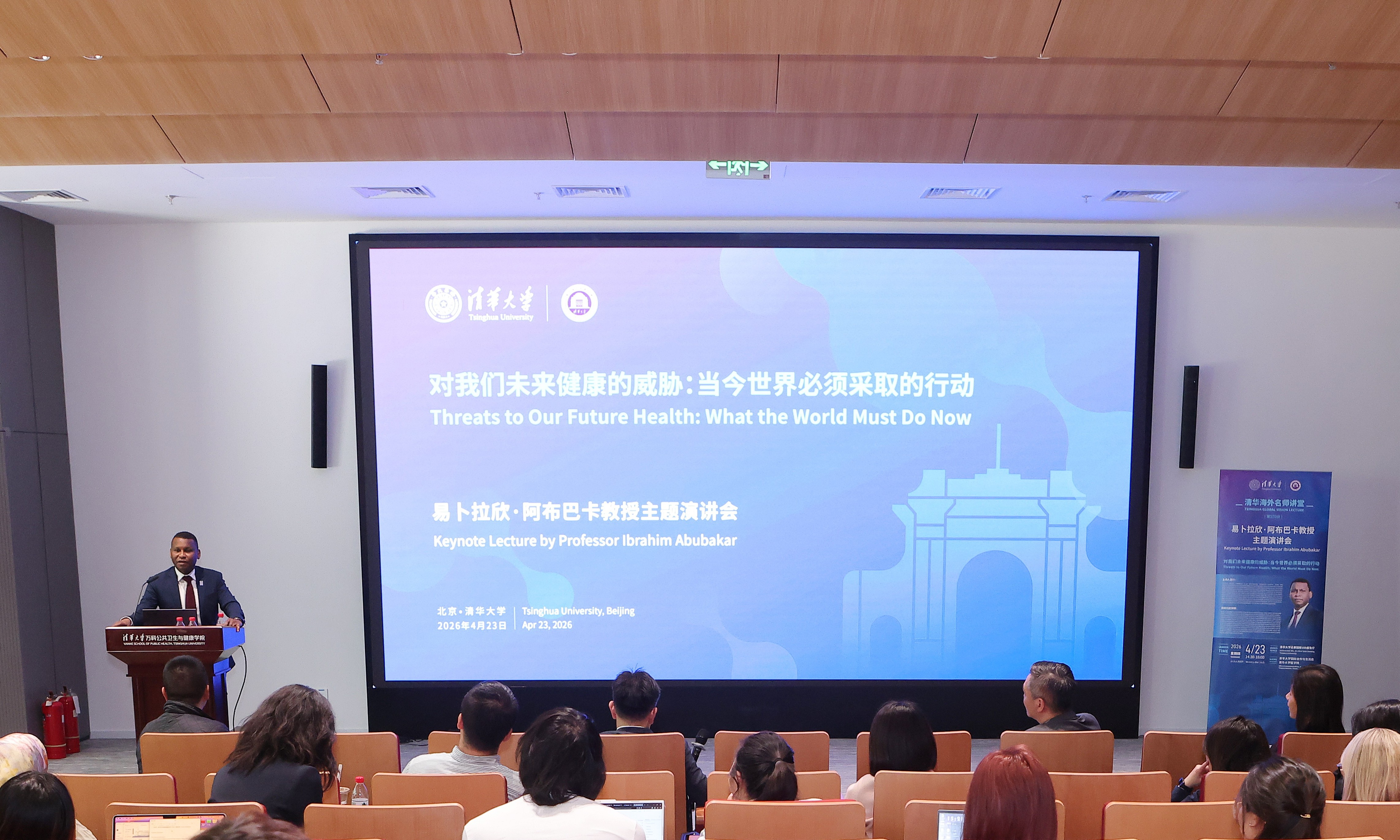
Lecture scene
The event was co‑organized by the Office of International Affairs and Tsinghua Medicine at Tsinghua University. Since its launch in 2007, the Tsinghua Global Vision Lecture Series has continued to bring together world‑renowned scholars, political figures, and industry leaders, serving as an important platform for broadening the international perspectives of faculty and students and deepening global academic cooperation and cultural exchange.



 News
News